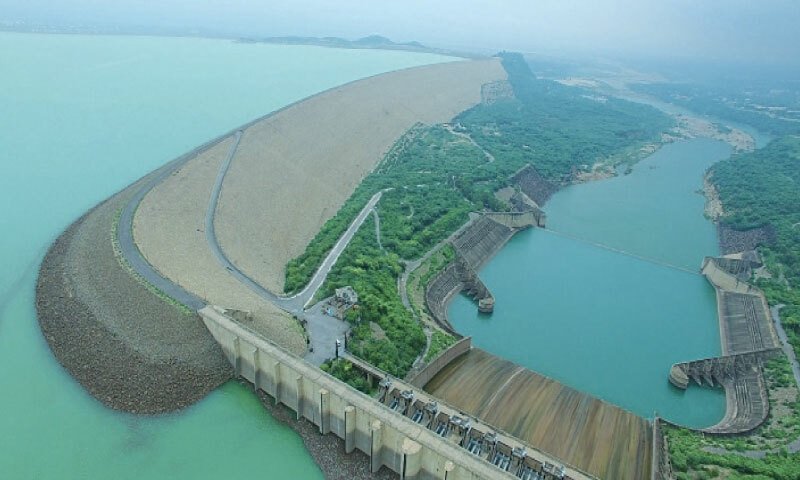
LAHORE: In line with the Indus River System Authority’s advisory-cum warning, the Mangla Dam on Saturday hit its dead level — minimum operating level of 1,050 feet — which would hamper agriculture in Sindh and Punjab due to a shortage of irrigation water in the near future.

On the other hand, Tarbela Dam also seems set to touch its dead level of 1,402 feet soon, as it recorded a storage level of 1,405.10 on Saturday. The water conservation level in Chashma Reservoir is also about to hit its dead level of 638.15 feet from the current 639.20 feet.
“Look, the water is life for all of us. Therefore, without it, we cannot live,” Pakistan Kissan Ittehad’s Chairman Khalid Khokhar told Dawn. “At present, the water flowing in the canal is less than the standard one, which leads to less watering for the crops—wheat, sugarcane, and others in the fields.”
According to Mian Ihsan Ul Haq, Pakistan Cotton Ginners Forum Chairman, the impact of water shortage in Sindh may be more severe than in Punjab, as almost the entire agri land/fields there depend on the canal water.
Mangla reaches dead level, Tarbela and Chashma reservoirs nearly dried
“The underground water in Sindh has brackish water. This is why the farmers have no option but to use canal water for watering crops. So if there is less or no canal water in Sindh, all standing crops, including sugarcane, cannot survive in coming days,” he warned.
Mr Haq said the situation in Punjab, especially the southern parts, may also face a real threat. He said the Punjab government had already banned the preparation of paneer (sowing) of the rice crop before May in the south Punjab.
To a question, he said if the situation doesn’t improve, the crops, including wheat—which is yet to have last watering—sugarcane, several vegetable crops in tunnel farming and mango orchards may have a negative impact.
“Moreover, the crops in Cholistan, where the underground water is not sweet but brackish, may also be in great trouble,” he further warned.
Meanwhile, the Water and Power Development Authority (Wapda) says that the Tarbela Dam’s live storage on Saturday remained at 0.015 million acre-feet (MAF), and its maximum water conservation capacity is 1,550 feet. .