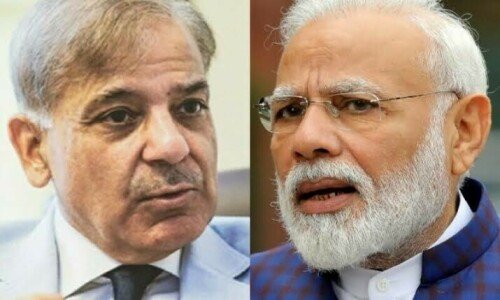
In the latest round of hostilities between India and Pakistan, a US-brokered ceasefire has sought to pause what risked spiralling into a catastrophic conflict between the two nuclear-armed neighbours.

But make no mistake: this was no negotiated compromise between equals in the conflict. Pakistan agreed to the ceasefire after securing a calculated victory by firmly denying a much stronger India the military edge and diplomatic narrative it sought to dominate.
The crisis began in the wake of the April 22 attack in Pahalgam, which India swiftly blamed on Pakistan-based militants without providing evidence. Islamabad’s call for a neutral investigation was brushed aside. Instead, New Delhi escalated — launching missile and drone strikes into Pakistani territory beginning May 7. The most intense exchanges came on the night of May 9-10, one of the tensest nights in decades, when Indian forces targeted Pakistani military installations, only to face swift and strategic retaliation from Pakistan.
Pakistan’s military response during the entire crisis was measured and decisive. Retaliating to India’s Operation Sindoor, Pakistan’s forces on May 7 took down five Indian jets, including advanced Rafales, using Chinese-supplied J-10Cs and PL-15E missiles — an undeniable blow to India’s air superiority pretensions. And then on May 10, in a rare and calculated action, Pakistan neutralised Indian S-400 missile systems using hypersonic missiles fired from JF-17 aircraft. These kills — Rafales and S-400 system — sent a message not only across the border but across the globe.
“This week’s India-Pakistan conflict has marked a turning point, with modern conventional weaponry reshaping the battlefield and expanding the scope for the conventional use of force,” Muhammad Faisal, South Asia research analyst at the University of Technology Sydney, said.
India’s ambitions to dominate the escalation ladder — long a cornerstone of its regional strategy — collapsed under the weight of these setbacks. The Rafale and S-400, icons of India’s defence modernisation, became symbols of its miscalculation. For the first time in years, Pakistan demonstrated not just parity but deterrent credibility that undermined India’s claims of military primacy.
Former national security adviser Gen Nasser Janjua said, “Pakistan has successfully re-established the deterrence, stability and balance in the region. Pakistan has also successfully buried the concept of limited war under a nuclear environment.”
Diplomatically, too, the tide turned. As the spectre of escalation loomed, the United States intervened — not out of favour to one side, but out of alarm. With India’s air force facing serious attrition and risk of deeper military degradation, Washington acted to cap the conflict.
Secretary of State Mark Rubio’s diplomacy made the leadership of both warring countries, including Army Chief Gen Asim Munir, negotiate. Crucially, the resulting agreement was not just about ceasing hostilities; it included Pakistan’s long-standing demand: that future talks take place at a neutral venue. This was not a face-saving gesture, it was rather a strategic vindication.
Simultaneously, the G7’s restrained statement of May 10, notably avoiding any blame on Pakistan and instead urging dialogue and de-escalation, marked a diplomatic win for Islamabad. India’s narrative — that it was the aggrieved party reacting to terrorism—failed to gain traction. Instead, New Delhi found itself increasingly portrayed as the aggressor, its unilateral actions and refusal of an independent probe into Pahalgam casting doubt on its intentions.
“India overassessed and miscalculated its newfound relevance while eyeing to become a counterweight to China and being part of the Indo-Pacific strategy. The whole conflict till May 10 exposed India’s exaggerated and inflamed strategic relevance,” Gen Janjua maintained.