• Panel told recent price fluctuations yielded Rs300bn profit for mills; chairman says ‘only 42 families’ benefitted
• Officials’ reluctance to share names of mill owners with lawmakers draws rebuke
• Committee told Rs150m spent out of Rs1.95bn allocated for flood awareness campaign, rest of the money diverted

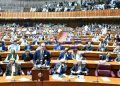
ISLAMABAD: Amid a hike in sugar price, the Public Accounts Committee was informed on Tuesday that the sugar mills have earned Rs300 billion due to recent fluctuations in the rates of the essential commodity.
The Auditor General of Pakistan made these revelations during the meeting of the apex parliamentary panel, which convened the high-stakes session to review the sugar import and export policy, rising prices, and the lack of transparency in the sugar industry.
The PAC met under the chairmanship of Junaid Akbar Khan and it was briefed by Industries and Production Secretary Saif Anjum, who stated that price regulation and relevant laws fell under provincial jurisdictions.
He revealed that from 2013 to 2023, the Economic Coordination Committee (ECC) permitted sugar exports amounting to 5.09 million metric tonnes, of which 3.927 million tonnes were actually exported. In 2023-24 alone, the country had a surplus of 1.3 million tonnes, and 790,000 tonnes were cleared for export, the secretary said, adding that the price remained “stable”.
However, the PAC members expressed serious concern, citing ground realities. Chairman Junaid Akbar Khan and other members, including Omar Ayub and Senator Fauzia Arshad, contradicted the government’s claims about the commodity.
Omar Ayub reported that sugar was selling for over Rs200 per kilogramme in many regions, while National Food Security Secretary Amir Mohyuddin maintained the national average was Rs173. According to Senator Fauzia Arshad, sugar had become both scarce and unaffordable.
‘Cycle of mismanagement’
Mr Akbar, meanwhile, slammed the cycle of mismanagement, stating, “Every year we repeat the same drama: first export (sugar), then import it.”
The PTI lawmaker questioned the lack of transparency, asking, “Who owns these sugar mills?” The committee had requested a list of owners, but the industries secretary said only directors’ names were available.
The committee rejected this explanation, demanding complete records. It warned, “No further briefings will be accepted without disclosure of owners.”
The Sugar Advisory Board (SAB) also drew flak for failing to regulate the industry effectively. “This is daylight robbery,” said MNA Khawaja Sheraz Mehmood, citing massive profiteering and poor governance. “Rs287 billion have gone into a few pockets,” claimed MNA Riaz Fatyana, while others accused the president and prime minister of allegedly protecting the profiteers.
The Federal Board of Revenue officials told the panel that a list of mills’ directors had been obtained, but the lawmakers sought full ownership transparency, leading to heated exchanges among the members.
Malik Amir Dogar named President Asif Ali Zardari, Jahangir Tareen, and the ruling Sharif family as major sugar mill stakeholders, leading to fiery arguments with fellow lawmakers Shazia Marri, Afnanullah Khan, and Bilal Mandokhail.
PAC Chairman Junaid Akbar Khan noted that only 42 families profited from this massive windfall. “Why is no one else allowed to set up sugar mills?” he questioned, pointing to the concentration of ownership and lack of competition.