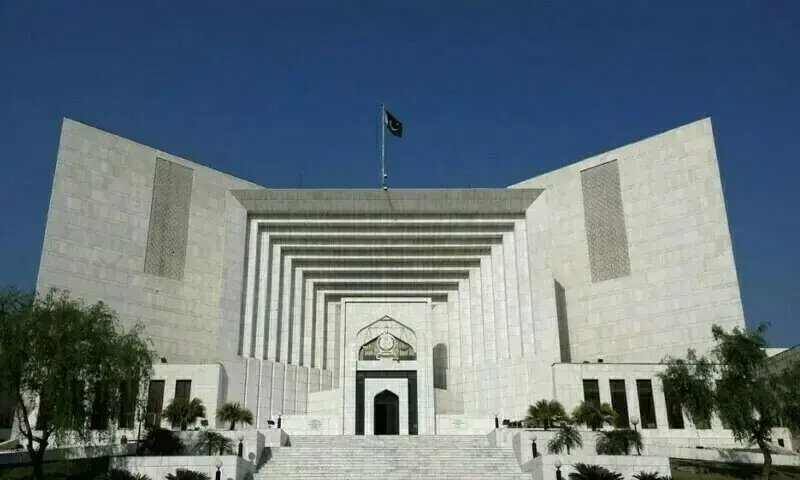
Yielding to several letters from Supreme Court judges, Chief Justice of Pakistan (CJP) Yahya Afridi called a full court meeting on Friday, after Justice Salahuddin Panhwar became the third judge to request that he convene the judges to deliberate on the 27th Constitutional Amendment.

Earlier, senior puisne Justice Syed Mansoor Ali Shah and Justice Athar Minallah had written separate letters to the CJP asking for a full court meeting or the convening of the judicial conference. However, the two justices resigned on Thursday evening in protest against the 27th Constitutional Amendment
Justice Panwhar, in a two-page letter, requested the CJP to call the full court to examine the amendment clause by clause and study its implications against Articles 175, 175A, 189, 190, 191 and 209 of the Constitution — provisions which deal with the judiciary.
Headed by the CJP, the full court meeting will be held at the Supreme Court building before the Friday prayers.
Justice Panwhar stated he was writing the letter “not in protest but in … the duty that binds every judge who has sworn to preserve, protect, and defend the Constitution”.
“There comes a time when silence is not caution but abdication. I believe such a time may now be upon us,” the letter read.
“From what has been foreshadowed, this amendment may unsettle the careful balance that the framers intended,” Justice Panwhar wrote, warning that the amendment may “touch upon the security of tenure, the composition of benches, the appointment and removal of judges, or even the financial and administrative autonomy of courts”.
“Let us test each provision of the amendment by a single question: does it strengthen the independence of the judiciary, or diminish it?” Justice Panwhar’s letter suggested, stating that if the independence of the judiciary is diminished, then judges must say so, “not in anger but in truth”.
Justice Panwhar also suggested commissioning a technical brief through the Pakistan Secretariat’s Law and Justice Commission and, if necessary, engaging the National Judicial Policy Making Committee.
He also suggested that the Supreme Court confer with the Pakistan Bar Council (PBC) and provincial bar councils, since the “bar and the bench are twin guardians of justice”.
The SC judge also asked to prepare to preserve their capacity under Article 190 of the Constitution, should litigation ensue, to ensure that the “judicial commands were not rendered hollow”.
“Let our response be principled yet temperate and firm in defence of constitutional boundaries, but respectful of the comity due among organs of the State,” the judge wrote.
“For Parliament’s power to amend is plenary, but it is not without limit, even if it does not say so,” the letter said, adding that the “Constitution was not clay to be moulded at will, it was a covenant between the state and citizen”.
Justice Panwhar wrote that his request was not born of discord, but conscience. He emphasised that the judiciary is a servant of the Constitution, not its master, but it would not stand if its independence is diminished.
“History will not remember the ease of our days but the courage of decisions,” Justice Panwhar added. He requested the meeting so that “we may together preserve the trust reposed in this court and ensure that the rule of law remains the law of the land, not in word alone, but in living truth”.