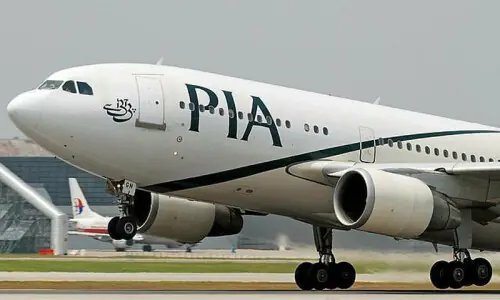
Pakistan International Airlines remained unaffected even as global airlines scrambled on Saturday to fix a software glitch on their Airbus A320 jets after a recall by the European planemaker temporarily grounded aircraft in Asia and Europe and threatened travel in the United States during the busiest weekend of the year.

The recall of 6,000 planes, covering more than half of Airbus’ global A320-family fleet, is among the broadest in its 55-year history and is a blow for the planemaker weeks after the A320 overtook the Boeing 737 as the most-delivered model.
“PIA has confirmed that its entire A320 fleet is not affected by this Airbus alert. PIA’s Engineering and Maintenance department is closely monitoring their fleet’s airworthiness, ensuring safe operations,” said a statement by the airlines spokesperson issued today.
Meanwhile, airlines worked through the night to make fixes after Airbus issued the emergency recall to 350 operators around the world, and global regulators directed carriers to remedy the software problem before resuming flights.
That appeared to help head off the worst-case scenario and capped the number of flight delays in Asia and Europe early on Saturday. The US will face high travel demand later in the day after the Thanksgiving holiday period.
“It’s not as chaotic as some people might think,” said Asia-based independent aviation analyst Brendan Sobie, adding that airlines were always prepared for various potential disruptions. “But it does create some short-term headaches for operations.”
Airbus is also now telling airlines that emergency repairs to some of the A320 jets affected may be less burdensome than first thought, industry sources said, with fewer than feared likely to need hardware changes rather than the software fix.
Even so, industry executives said the abrupt action was a rare and potentially costly headache at a time when maintenance is under pressure worldwide from labour and parts shortages.
Fix is simple but necessary
Globally, there are about 11,300 of the single-aisle jets in service, including 6,440 of the core A320 model. The fix mainly involves reverting to earlier software, and although relatively simple, it must be completed before the planes can fly again.
European low-budget airline Wizz Air said early on Saturday that software updates had been implemented overnight on all its affected A320-family jets with no further disruption expected.
Flight tracker data from Cirium and FlightAware showed most global airports operating with good-to-moderate levels of delays.
AirAsia, one of the world’s largest A320 customers, said that it aimed to complete fixes in 48 hours, with engineering teams “working around the clock”.
India’s aviation regulator said 338 Airbus aircraft in the country were affected, but the software reset would be completed by Sunday.
The country’s largest airline, IndiGo, said it had completed the reset on 160 out of 200 aircraft, while Air India said it had done 42 of its 113 impacted planes. Both airlines warned of delays.
Taiwan’s Civil Aviation Administration instructed airlines to conduct inspections and maintenance. It estimates that around two-thirds of the 67 A320 and A321 aircraft operated by the island’s carriers are affected.