• UNSC assessment reveals some senior Taliban members increasingly view TTP as a liability, others remain supportive
• Report says border closures estimated to cost Afghan economy around $1 million per day
• Monitoring body says Al Qaeda has ‘blended itself with TTP’, with or without Taliban acquiescence

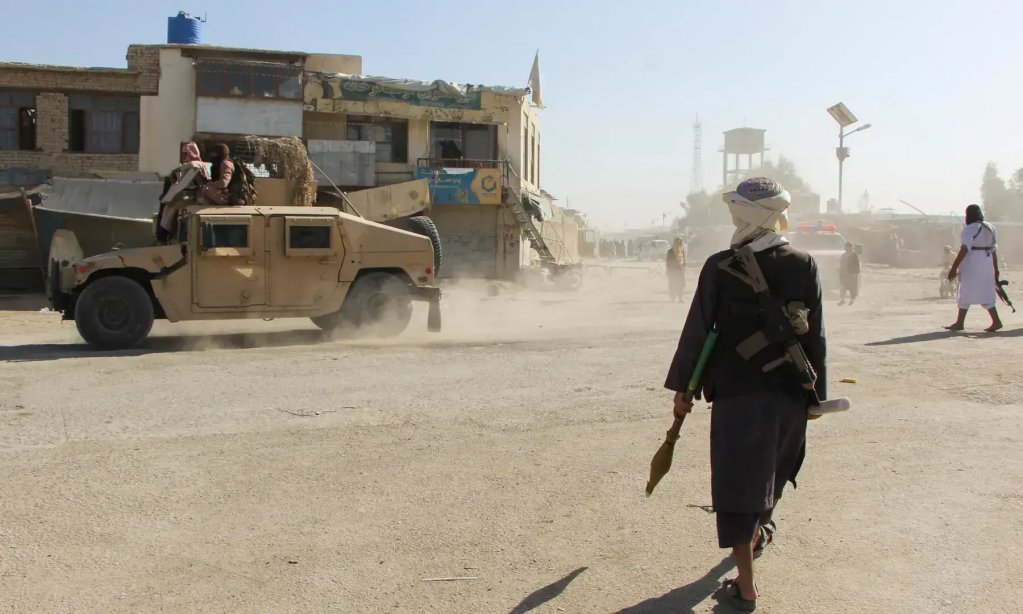
ISLAMABAD: A United Nations Security Council report has rejected the Taliban’s claim that terrorist groups are not using Afghan territory for cross-border violence, calling the assertion “not credible” and warning that neighbouring states increasingly view Afghanistan as a source of regional insecurity.
The assessment is contained in the sixteenth report of the Analytical Support and Sanctions Monitoring Team, submitted to the UN Security Council, as international concern grows over Afghanistan’s security landscape more than four years after the Taliban returned to power in August 2021.
“The de facto authorities continue to deny that any terrorist groups have a footprint in or operate from its territory. That claim is not credible,” the report said.
The Taliban had pledged under the 2020 Doha Agreement to prevent Afghanistan from being used to threaten other countries. While following their return to power in Aug 2021, they have aggressively targeted Islamic State-Khorasan Province, or ISIL-K, their stance toward other terrorist groups has been markedly different, according to various UN assessments.
The latest report said “a wide range of member states consistently report that ISIL-K, Tehreek-i-Taliban Pakistan (TTP), Al Qaeda, the Eastern Turkistan Islamic Movement, also known as the Turkistan Islamic Party (ETIM/TIP), Jamaat Ansarullah, Ittihadul Mujahideen Pakistan, and others are present in Afghanistan. Some groups have used or are continuing to use Afghanistan to plan and prepare external attacks.”
Al Qaeda is assessed by the United Nations as maintaining close ties with the Taliban, with a persistent presence in several provinces. While its activities are kept low-profile, UN monitors say the group benefits from a permissive environment that allows training and reorganisation. By contrast, ISIL-K is considered the Taliban’s primary adversary. Taliban operations have degraded its territorial control, but the group has remained resilient, carrying out attacks inside Afghanistan and abroad.
The most acute threat to regional stability, however, is seen as the TTP, which the UN report describes as enjoying strong support from elements within the Taliban and operating from Afghan sanctuaries.
“Taliban authorities continue to deny and deflect responsibility for failing to restrain TTP,” the report said. “Within the Taliban there are varying degrees of sympathy for and allegiance with TTP.”
“Some senior members increasingly view TTP as a liability, unnecessarily disrupting and antagonising relations with Pakistan, while others remain supportive of it,” the report said. Assessing the likelihood of the Taliban severing ties with the group under Pakistani pressure, the report said, “Given the historical ties, the Taliban are unlikely to confront or act against TTP.” It added, “Even should they wish to, they may lack the ability to do so.”
According to the report, the TTP has conducted “numerous high-profile attacks in Pakistan from Afghan soil”, making it the most serious immediate challenge to relations between Kabul and Islamabad.
“The number of TTP attacks in Pakistan has been increasing throughout 2025,” the report said. “By some estimates, there have already been more than 600 attacks in Pakistan in 2025.”