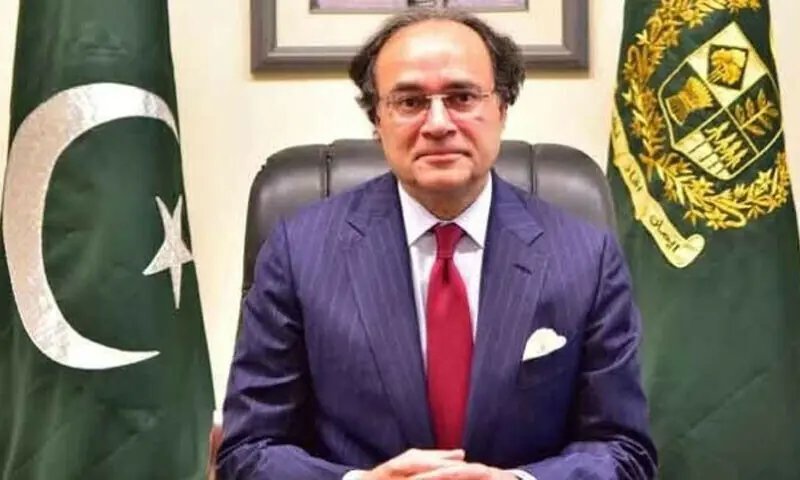
Finance Minister Muhammad Aurangzeb said on Wednesday that Pakistan had reached a critical turning point, with macroeconomic stability, sustained reforms, and policy continuity restoring confidence and steering the economy toward export-led, long-term growth.

In an interview with USA Today, the minister said this was opening new horizons for domestic and global investors, and positioning the country for sustainable, long-term economic growth.
He said this transition was enabled by macroeconomic stabilisation, easing inflation and improved external balances, with the government driving export-led, productivity-based growth through structural reforms, sustaining reform momentum despite challenges, and actively encouraging global investment in emerging opportunities across agriculture, minerals, technology and climate resilience.
He noted that, for the first time in several years, Pakistan had achieved both a primary fiscal surplus and a current account surplus, signalling a decisive shift away from the cycle of recurring deficits.
He said that strong remittance inflows had played a critical role in supporting this turnaround, while inflation had fallen sharply from a peak of 38 per cent to single-digit levels.
He also noted that foreign exchange reserves had risen to over $14.5 billion, providing import cover of approximately two-and-a-half months, while the exchange rate had remained stable, helping to restore investor confidence.
Aurangzeb emphasised that while macroeconomic stabilisation was an essential foundation, sustainable growth remained the central challenge.
He pointed out that the economic growth of 2.7pc in the previous fiscal year, though positive, was insufficient to absorb the needs of a rapidly growing population.
He underlined that Pakistan was consciously moving away from a consumption and debt-driven growth model toward an export-led strategy.
The current budget, he explained, reflected this shift through structural reforms in taxation, energy pricing, and state-owned enterprises, alongside far-reaching tariff reforms aimed at dismantling decades of protectionism and enhancing global competitiveness.
He highlighted that Pakistan was aligning its economic strategy with changing global demand patterns, identifying information technology services, textiles, and agricultural exports as key areas with strong potential.
He said efforts were also underway to simplify the tax regime for exporters and reduce bureaucratic hurdles in order to foster long-term productivity and competitiveness.
Addressing the broader reform agenda, Aurangzeb ssaid that the privatisation of state-owned enterprises, tariff liberalisation, and restructuring of the energy sector were designed to address deep-rooted inefficiencies that had historically strained public finances.