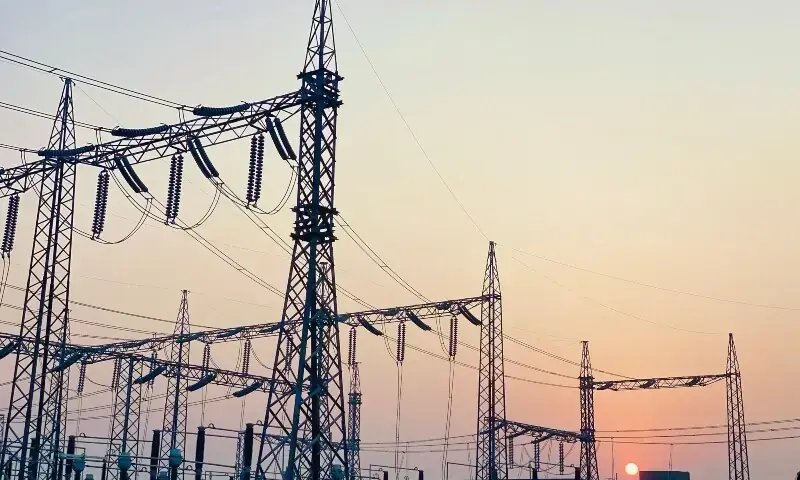
• Transmission system suffers from overloading, underutilisation
• 116 of 192 transformers overloaded beyond 80pc capacity
• Regulator urges fast-tracking projects, upgrading substations
• Says up to 1,750MW of cheaper power frequently curtailed

ISLAMABAD: Pakistan’s national transmission system, one of the largest in the world, suffers from a damaging mix of overloading and underutilisation, creating operational constraints that undermine merit-based power supply and impose an unquantifiable financial burden on consumers and the national economy, the National Electric Power Regulatory Authority (Nepra) has said.
In a detailed review of the national grid system, the regulator pointed out that the backbone of the transmission network — 500kV and 220kV lines — remained “mostly overloaded” at the close of FY2024-25. It said the National Grid Company (NGC) faced critical overloading in several sections of its 500kV and 220kV network, particularly during summer peak demand.
“Many grid stations and power transformers are operating beyond 80 per cent of their rated capacity, risking equipment failure, voltage instability and outages,” it said. In FY25, out of 192 transformers across 68 grid stations, 116 were overloaded beyond 80pc, it added.
Providing a breakdown, Nepra said 30 of 47 transformers at the 500/220kV level were overloaded beyond 80pc. In addition, 86 of 145 transformers at the 220/132kV level were overloaded beyond the same threshold.
Regions with notable overloading included Hyderabad, Islamabad, Lahore and Multan, with persistent constraints at key grids like Gatti, New Multan, Sarfaraz Nagar, Muzaffargarh and Sheikhupura.
“These limitations have led to reliance on expensive generation in violation of economic merit order (EMO) and rising project costs due to delays,” it said.
Ironically, most of these grid stations at Rawat, Sheikhupura, Gatti, Multan, Yousafwala, Jamshoro and Muzaffargarh have been in an overloaded condition since 2017-18 and onwards.
According to the review, these constraints have limited full power evacuation from the 1,300MW Sahiwal coal-fired plant, overreliance on Attock, Halmore, Sapphire and Liberty, limited transformation capacity in the south-central corridor and aggravated bidirectional power flows in the network.
The regulator called for fast-tracking the completion of critical transmission projects, upgrading existing substations with higher-capacity transformers and reactive power support, and enhancing real-time grid monitoring to address persistent overloading in the transmission network.
It said the resulting financial burden could not be calculated under current conditions because assessing the severity and duration of overloading would require hourly digitised operational data to determine how long a transformer or circuit operated beyond its rated capacity.
The regulator warned that transmission system constraints significantly impact the overall efficiency, reliability and affordability of electricity supply. When the transmission network lacks adequate capacity or flexibility, it restricts the flow of power from generation sources to demand centres.
“This leads to congestion, increased transmission losses and underutilisation of low-cost or renewable generation, ultimately raising the overall cost of electricity,” Nepra said.
“Transmission constraints not only raise reliability concerns for consumers but also lead to higher electricity tariffs. This is primarily because, in the absence of adequate transmission capacity, the system must rely on more expensive and less efficient power generation sources, even when cheaper alternatives are available but inaccessible,” it explained.
It said that one of the key challenges in the country’s power sector was the persistent inadequacy of the transmission system, particularly in evacuating electricity from cost-effective and indigenous generation resources located in the southern part of the country.
It noted that the system was often forced to rely on more expensive power plants in the northern region, which significantly increased the overall cost of electricity supply.
Despite the critical importance of resolving these issues, many transmission bottlenecks have remained unaddressed for years. The NGC has consistently failed to resolve them in a timely and efficient manner.
Observations show that nearly every second project undertaken by the NGC suffers from time delays and cost overruns. These delays not only inflate capital costs but also result in operational inefficiencies, such as the forced dispatch of power plants in violation of the EMO, leading to substantial financial losses for the power system.