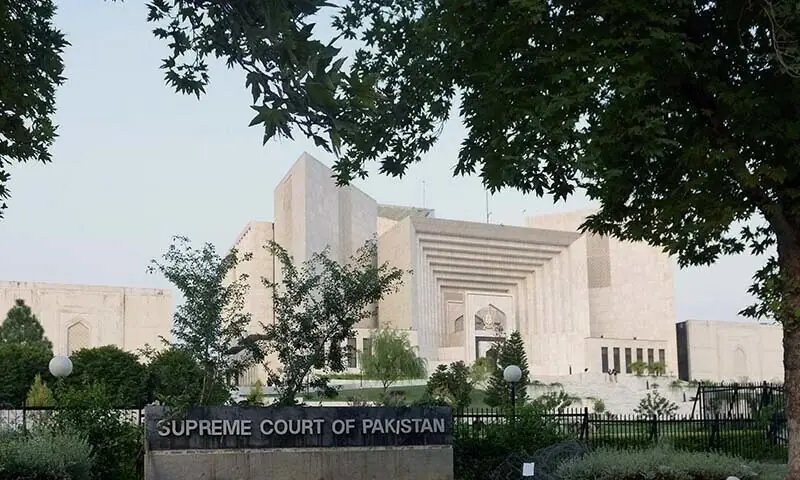
ISLAMABAD: The Supreme Court on Tuesday declared that employees of cantonment boards are not civil servants and, therefore, cannot invoke the jurisdiction of the Federal Service Tribunal (FST) against disciplinary actions.

A two-judge SC bench, headed by Chief Justice of Pakistan (CJP) Yahya Afridi and including Justice Muhammad Ali Mazhar, issued the ruling while deciding a civil petition filed by the executive officer of the Sialkot Cantonment Board against the Nov 20, 2023 judgement by the FST Islamabad. The court set aside the tribunal’s judgement, which had ordered a de novo inquiry (fresh investigation) into the dismissal of a driver.
The case originated from disciplinary proceedings against Qaiser Mehmood, the driver employed by the Cantonment Board Sialkot. On Dec 31, 2015, he was served a charge sheet containing allegations of misconduct, including subletting government accommodation. An inquiry committee was constituted, and after a final charge sheet, a major penalty of discharge from service was imposed on Aug 26, 2016.
After his departmental appeal was rejected on Feb 22, 2019, the driver approached the FST, which on Nov 20, 2023, set aside both the original punishment and the appellate order. The tribunal directed the competent authority to hold a de novo inquiry in line with directives issued by the director general through a June 6, 2023 letter.
Says FST lacks jurisdiction over their service matters, sets aside tribunal’s verdict in Sialkot Cantt driver case
Subsequently, the Sialkot Cantonment Board challenged the FST’s decision before the Supreme Court. The controversy before the court was whether employees of cantonment boards qualify as “civil servants” to appeal before the FST under the Service Tribunal Act, 1973, read with Article 212 of the Constitution.
Advocate Muhammad Ramzan Chaudhry, representing the cantonment board, argued that the respondent was not a civil servant but an employee of a corporate body established under the Cantonments Act, 1924. He contended that the employee’s service matters were governed by the Pakistan Cantonments Servants Rules, 1954, and not by the Civil Servants Act, 1973, and, therefore, the FST lacked jurisdiction.
Additional Attorney General Rashdeen Nawaz Kasuri supported this position.
The respondent, appearing in person, maintained that the FST had rightly set aside the penalty and ordered a fresh inquiry.