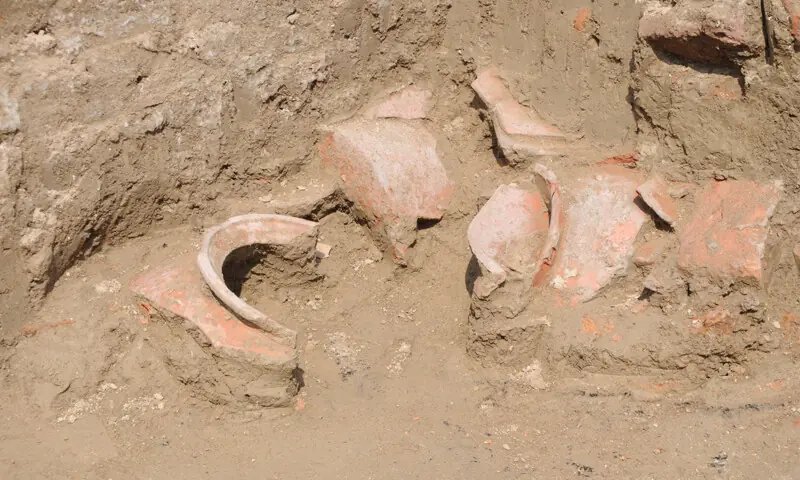
• Structural walls, mound formation and scattered remains unearthed
• Structures may belong to historic settlement or mosque complex; scientific analysis underway to determine their age and function
• Experts regret fragile structures at risk of damage yet to be declared protected

THATTA: Archaeologists have discovered submerged ruins, including a mound and structural remains believed to be part of a historic structure, during Sindh’s first marine archaeology exploration in the Indus Delta, officials said.
According to the exploration team, the discoveries include submerged structural walls, a mound-like formation and scattered architectural remains located beneath shallow coastal waters near Lahori Bandar in Banbhore, Sindh.
Archaeologists said visible stone and brick alignments suggest the remains could belong to a historic structure, possibly part of a settlement or a mosque complex that once existed along the historical port.
Detailed scientific analysis and documentation of the site are underway to determine the age, layout and original function of the submerged remains.
The exploration was undertaken by the Sindh Culture, Tourism, Antiquities and Archives Department in collaboration with an international mission from Aga Khan University London as part of a broader excavation project at Lahori Bandar, also known as Jhakhi Bandar, conducted from Feb 1 to 28, 2026.
The survey team included Olivier Onezime, French surveyor; Aamir Bazil, marine heritage expert; and Zahida Quadri, head of the Pakistan excavation team.
Archaeologist Stephane Pradines, the excavation in-charge, raised serious concerns about the safety of the fragile remains, warning that the structural walls are extremely delicate and could rapidly deteriorate if the area remains open to visitors. He recommended that access be restricted strictly to authorised personnel holding a valid no-objection certificate from the Forest Department and Sindh archaeology authorities.