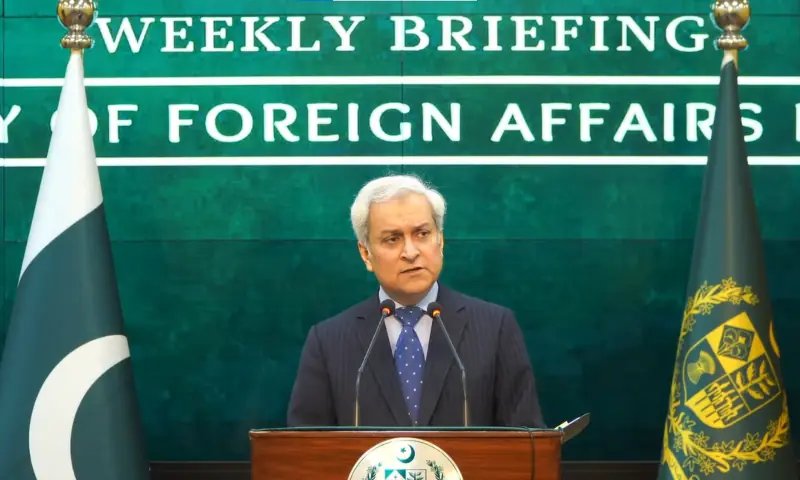
The Foreign Office (FO) on Thursday refuted reports that Deputy Prime Minister and Foreign Minister Ishaq Dar shared any information regarding Iran’s nuclear programme during a meeting with United States Secretary of State Marco Rubio.

Dar met with Rubio on May 29 during a brief visit to Washington, where the two discussed bilateral cooperation as well as regional security issues. Rubio had praised Islamabad’s role “in advancing peace in the Middle East”.
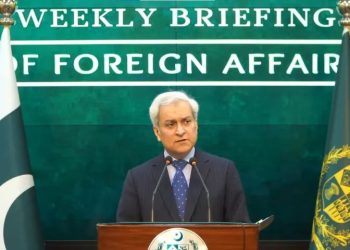
Responding to queries during a weekly press briefing on Thursday, FO Spokesperson Tahir Andrabi said Pakistan rejected reports of the deputy premier “exchanging any kind of information about Iran’s nuclear programme”.
“No such information was shared,” he added.
The spokesperson’s remarks come after former Central Intelligence Agency (CIA) analyst Larry Johnson, quoting an unnamed source, claimed that Dar had a conversation with Rubio that “revealed what Iran is prepared to do to preserve its independence”, which allegedly “alarmed” Rubio.
Rubio had also responded to the claims during a congressional hearing on Wednesday. US Congressman Scott Perry asked him if Dar had delivered a message that Iran is “prepared to demonstrate a nuclear weapon should the current escalation continue”.
“I have not seen that reporting and I am not aware of any such message,” Rubio responded.
Perry again referred to the reports, to which Rubio said that no such message had been delivered.
“I would be surprised if that message had been relayed. I would be aware of it if it was,” he said.
The US-Iran conflict is currently stalemated in a shaky ceasefire struck in April, which was followed by historic direct talks between the warring parties hosted by Pakistan.
Though daily strikes throughout Iran and the Gulf have stopped since then, bursts of armed conflict have continued.
The US and Iran exchanged attacks on each other’s military targets on Monday. After the US military carried out strikes near the Strait of Hormuz, Iran responded with a missile attack on Wednesday, damaging Kuwait’s airport and resulting in casualties.
Since the conflict began, Iran has repeatedly attacked targets in the Gulf region home to US military bases.
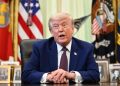
Meanwhile, Israel’s expanding front in Lebanon has proved to be the main spoiler in the peace process, with rising tensions even prompting US President Donald Trump to tell Israel’s PM Benjamin Netanyahu to halt the attacks.
Nevertheless, diplomacy has continued with Trump under pressure to reach an agreement that would lift the US and Iranian competing blockades around the Strait of Hormuz, which have choked international oil supplies and threatened the global economy with rising prices.