• Economic Survey shows major targets missed as Aurangzeb claims resilience amid three major shocks
• Says budget to offer incentives for agriculture, housing
• Over Rs900bn to be diverted for Centre’s strategic needs
• Centralised tax system, retailer model to be announced
• Oil price impact to continue next year
• Current account deficit falls to $252m; remittances may reach $41-42bn by year-end
• Fiscal deficit falls to 0.7pc of GDP; debt-to-GDP ratio drops to 68.5pc
• FBR recovers Rs94bn through digitisation, AI audits

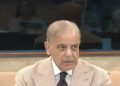
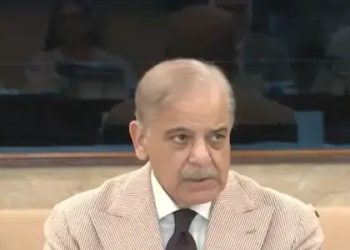
ISLAMABAD: The freeze on provincial development programmes, expected to generate more than Rs900 billion in additional resources for the Centre’s strategic needs, will continue for a specific period beyond one year, Finance Minister Muhammad Aurangzeb said on Wednesday as he unveiled the Pakistan Economic Survey 2025-26, which showed missed targets across major economic sectors in the outgoing fiscal year.
Reviewing the economic report card, the minister said the economy grew by 3.7 per cent this year — almost the same as the 3.6pc reported at this stage last year, later revised down to 3.2pc — reflecting resilience and economic stability in the face of three major exogenous shocks: global trade and tariff challenges at the beginning of the fiscal year, floods in Pakistan and, finally, regional war-related pressures.
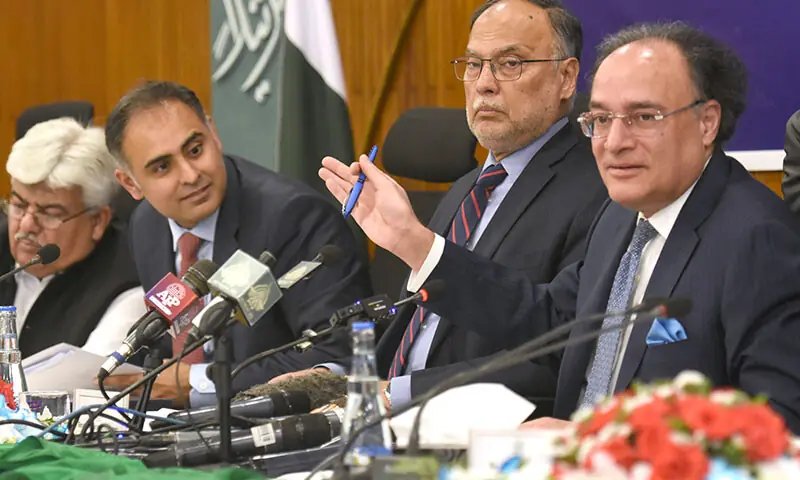
Aurangzeb, who was flanked by the ministers for planning and information, the minister of state for finance and the railways minister, said he would explain in detail in his budget speech the mechanism for utilisation of additional resources secured from the provinces through the development freeze.
Asked whether the understanding outside the National Finance Commission, formalised at the National Economic Council meeting a day earlier, was permanent or limited to one year, he said the arrangement would be for a specific period beyond one year.
The finance minister appreciated the Khyber Pakhtunkhwa government and the “impressive engagement” with Chief Minister Sohail Afridi during the NEC meeting on Tuesday. He also valued the contribution of Muzzammil Aslam, saying the IMF programme was not only an agreement of the finance ministry or the Centre but of the entire country.
The minister said the government would offer special incentives for agricultural productivity and the housing sector in the budget on Friday (today) and provide end-user interest rates in single digits for 10 years.
He said the trade policy for the auto sector had already been announced for five years to provide a forward-looking vision because domestic investment had to pick up before foreign investment could follow.
The minister said discussions with the IMF were progressing positively. He declined to comment on relief for the salaried class, saying the prime minister had given clear instructions on the sectors that needed to be focused on, including salaried individuals and documented businesses.
He said a new taxation operating model for retailers and a “faceless” tax system — a digital and centralised system involving no contact between officials and taxpayers — would also be announced in the budget.
Responding to a question on the contingency plan in case the Iran crisis prolonged, the minister said the oil import bill had an impact on Pakistan’s external account. He said the oil bill had increased by about $1bn in April and later dropped to about $500 million in May as government policies with regard to taxation took shape.