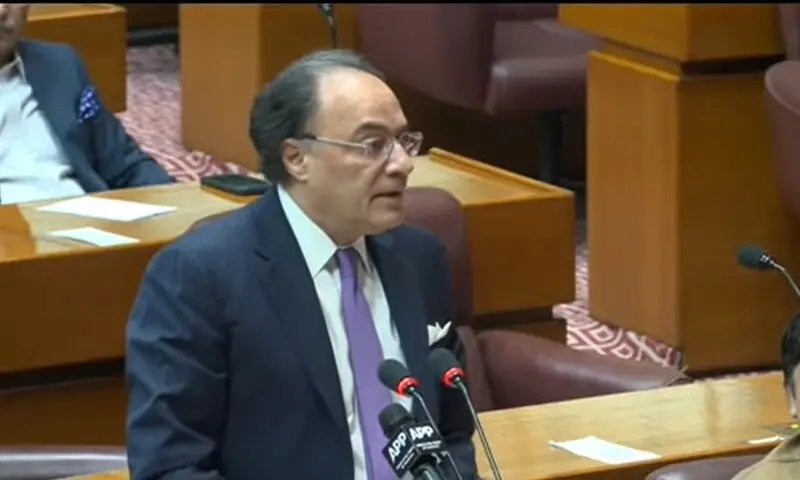
Finance Minister Muhammad Aurangzeb on Saturday asserted that the proposed budget for the next fiscal year (FY27) would set the foundation for “accelerating the sustainable growth” recorded in the past two years.

He made the remarks on the floor of the National Assembly as he wound up the debate on the budget FY27, which was presented on June 12.
The finance czar recalled that MNAs presented their opinions on the proposed budget during the debate, adding that reservations were also voiced in some proposals.
“But, we have gotten very clear feedback from within and outside the House that this is overall a positive and pro-growth budget, which sets the foundation to accelerate the sustainable growth witnessed over the last two years,” he declared.
Speaking on the budget proposals, Aurangzeb stated that a “sustainable and inclusive export-led growth that increases productivity” was the fundamental objective of the government and the budget.
“We often hear and see that the documented corporate sector and salaried class have to bear most of the tax burden. The government has changed this trend and thinking in the budget, and focused on deepening and broadening rather than burdening,” he contended.
“We had initiated this change in the last budget and clarified our direction. In this budget, we have taken additional and concrete initiatives regarding it,” the finance czar affirmed.
He added that the burden of existing taxpayers — particularly the salaried class, small businesses, exporters and industrialists — would be reduced under the FY27 budget, keeping in mind the “principles of equity and fairness”.
“We have ensured the provision of concessional loans for importers and the agriculture sector,” Aurangzeb said, emphasising that the Fixed Asaan Tax Scheme has been introduced to broaden the tax net.
Elaborating on reforms brought in the tax sector in the past two years, he said: “We have detached tax policy from tax administration. We are introducing a new tax operating model in continuation of these reforms, under which the interaction between a taxpayer and a tax officer will be removed.
“The process of audit, identification and implementation will be conducted through an automatic […] system,” the minister said, adding that these reforms aimed to end discretionary powers and prevent harassment through digitisation and promote transparency.
Responding to remarks made by some lawmakers on the Federal Board of Revenue’s (FBR) performance, Aurangzeb said that the government welcomed constructive criticism but stressed the need to consider the context.
Presenting a “comparative analysis”, the minister noted that an additional $14bn was collected in revenue from 1988 to 2011.
“Similarly, additional revenues of $14bn were collected in the next 13 years from 2011 to 2024. Compared to this, in the brief period of the past two years, our government has secured additional revenues of $14bn,” he stated.
On the discussions held about the agricultural sector during the budget debate, Aurangzeb affirmed that the sector was the “backbone” of Pakistan’s economy and the government had announced “satisfactory relief and developmental packages” for farmers.
He noted that the Zarkhez scheme had been initiated, under which interest-free and collateral-free loans were being provided to 750,000 small-scale farmers.