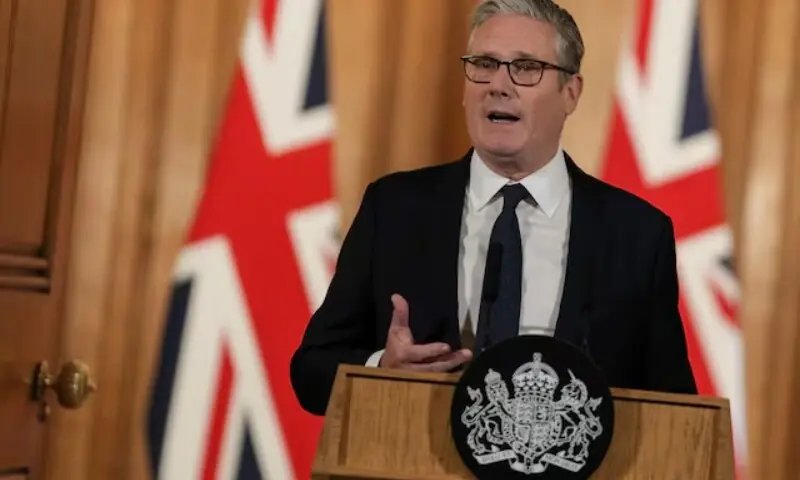
Prime Minister Keir Starmer on Monday resigned from his position, paving the way for Britain’s seventh leader in a decade.

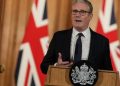
Addressing the press outside 10 Downing Street, Starmer said he would accept his party’s decision with “good grace”, and would extend his unequivocal and full support to his successor.
“Every decision I have taken has been about putting the country I love first, and that is why I will resign as leader of the Labour Party.”
He added that he informed Britain’s King Charles III of his decision in the morning.
Starmer said he had asked the Labour Party’s National Executive Committee to set out a timetable opening on July 9 and completed by the summer recess.
“In the case of a contest, this will ensure a new leader is in place before parliament returns in September,” he said, stating that he will remain in post as prime minister “until a contest is complete”.
“I will do everything I can to ensure an orderly handover of power,” he added.
Starmer’s main rival, veteran politician Andy Burnham, is due to be sworn in as a member of parliament on Monday after winning a crucial special election on Thursday, allowing him to return to parliament and clearing his path to run for party leader.
At the outset of his press briefing, Starmer said that being elected as a Labour PM two years ago was the “proudest moment” of his life.
“A new Labour government in 14 years, a page in our country’s history turned after years of disappointment and despair, the chance to change the lives of millions of people for the better,” he said, citing it as the reason he entered politics.
“Six years ago, I inherited a Labour Party that was politically, financially and morally bankrupt,” Starmer said, recalling that he was told, “time and time again that my party was finished”.
“That we were consigned to history and that the majority of the general election, let alone a landslide majority, was not possible,” he said; however, he stressed that the critics were proved wrong as the party went through a transformation.
“We changed our party, ripping out anti-semitism, restoring trust in the economy, defence, national security and becoming a party that once again stood proudly with, not against, our national flag,” Starmer said.
He said the reform was brought about with a “singular purpose”, which was to “change Britain for the better, to build a fairer country, with dignity and respect where everyone is seen, everyone is valued and wealth and opportunity for all, not just a privileged few”.
Starmer stated that in the past two years, his government had achieved a robust economy and increased wages against inflation “every single month”.