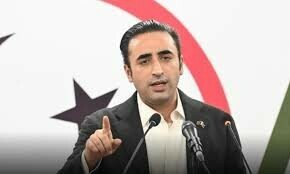
LARKANA: PPP Chairman Bilawal Bhutto-Zardari on Saturday criticised the federal government’s “unilateral approach” to water resource management, calling for consensus-driven policies to avoid controversy.

Speaking to journalists in Ratodero, Mr Bhutto-Zardari highlighted concerns over recent decisions to construct canals, likening them to the contentious Kalabagh Dam project.
“The unilateral decisions on canals, just like the Kalabagh Dam, disregard the rights of smaller provinces. Resistance to such projects began in Khyber Pakhtunkhwa, not Sindh, and we ensured such divisive plans were blocked,” he said.
He urged the federal government to respect the 1991 accord, warning that bypassing agreements could deepen provincial discord.
The PPP chairman accused the PML-N-led government of ignoring provincial rights in its developmental policies. “The federal government must treat all provinces equitably, ensuring fair access to resources like water,” he added. He also criticised amendments to the Indus River System Authority agreement as exceeding the government’s mandate and called for inclusive policymaking.
Internet woes
Mr Bhutto-Zardari also expressed frustration over slow internet speeds and criticised the government’s alleged negligence in addressing the issue. “PML-N’s politics revolves around motorways, but for this generation, infrastructure means digitalisation and high-speed internet,” he said.
He highlighted Pakistan’s low rankings on global internet speed indices, noting that unreliable connectivity hindered the country’s potential in the digital economy.
Instead of clamping down on internet access in the guise of security, the government should focus on improving bandwidth and speed, he said, adding that digital connectivity was essential for economic growth.
Mr Bhutto-Zardari questioned the government’s explanations for internet disruptions, wondering whether fish are only “eating” Pakistan’s undersea internet cables. “Such excuses are not acceptable when people face disruptions daily,” he quipped.
He stressed that internet access was a fundamental right and urged the government to encourage digital e-commerce and skill development among the youth.