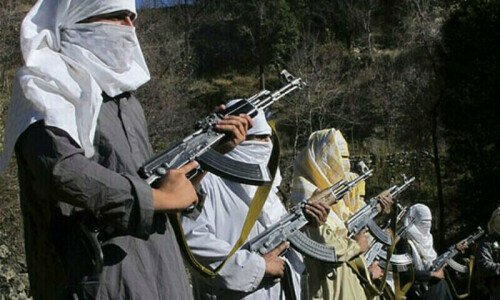
ISLAMABAD: A United Nations report has revealed that Afghan Taliban’s continued support for the banned Tehreek-i-Taliban Pakistan (TTP), despite Islamabad’s increasing pressure to cease backing the outfit, was fuelling the group’s escalating attacks in Pakistan.

This was stated in the 35th report of the Analytical Support and Sanctions Monitoring Team submitted to the UN Security Council.
The Analytical Support and Sanctions Monitoring Team is a panel of independent experts established by the UN Security Council to support sanctions implementation against individuals and entities linked to Al Qaeda, Islamic State in Iraq and the Levant (Daesh) and associated groups.
The team submits biannual reports assessing the threat landscape posed by these organisations to form international policy and security strategies.
Scale of outfit’s attacks in Pakistan has increased significantly, according to report by UNSC-formed monitoring team
The report, covering the period from July 1 to Dec 13, 2024, states the “status and strength of TTP in Afghanistan had not changed”, while the group intensified its assaults on Pakistan, conducting over 600 attacks during the reporting period, many launched from Afghan territory.
Financial, operational backing
It underscored that the Taliban continued to provide the outlawed TTP with logistical and operational space and financial support, bolstering the group’s capacity to sustain its activities.
The report revealed that the family of TTP leader Noor Wali Masoud receives around $43,000 per month from the Afghan Taliban, reflecting a significant level of financial backing for the terrorist group.
The TTP has also “established new training centres in Kunar, Nangarhar, Khost, and Paktika (Barmal) provinces” while enhancing recruitment, including from within the Afghan Taliban’s ranks.
This expansion has contributed to TTP’s continued status as the largest Afghanistan-based terrorist organisation, with an estimated 6,000 to 6,500 fighters. The group’s growing influence is linked to the Afghan Taliban’s continued ideological and historical ties with TTP.
Amid escalating attacks, Pakistan has intensified military operations under “Azm-i-Istehkam”, targeting TTP hideouts across the Afghan border, particularly in Paktika and Khost. These military measures include cross-border raids and retaliatory strikes.
Simultaneously, Pakistan pursued diplomatic engagements, sending delegations to Kabul to urge the Afghan Taliban to take action against TTP sanctuaries. However, the Afghan authorities remained reluctant, proposing mediation rather than decisive measures, leading to a diplomatic impasse.
The UN report corroborates these developments, highlighting that the Taliban’s support has enabled TTP to escalate its offensive strategy against Pakistan. The report stated, “The ambition and scale of its (TTP) attacks on Pakistan… had significantly increased.”
TTP’s operational capabilities have been further strengthened by increased collaboration with Al Qaeda in the Indian Subcontinent (AQIS) and other terrorist groups. The report indicates that these organisations are “conducting attacks under the banner of Tehrik-i-Jihad Pakistan (TJP)”.