• Exporters apprehensive of commerce ministry’s ‘lack of readiness’ to address situation
• Expert calls for preferential trade deals with countries, including US

ISLAMABAD: As the government considers its options, the private sector views the Trump administration’s reciprocal tariffs as a strategic manoeuvre to compel Islamabad to engage in discussions for better access to the Pakistani market.
The tariffs have also impacted Pakistan’s three main competitors in the US market — India, Vietnam, and Bangladesh. However, New Delhi and Hanoi have already prepared in advance, while Pakistan’s commerce ministry remains in the early stages of discussions.
Despite maintaining the lowest tariffs on US products, Bangladesh has requested a three-month extension from Washington. In contrast, Vietnam has proposed a zero-duty policy for US goods. However, Washington seeks to bring these countries, including Pakistan, to the negotiating table.
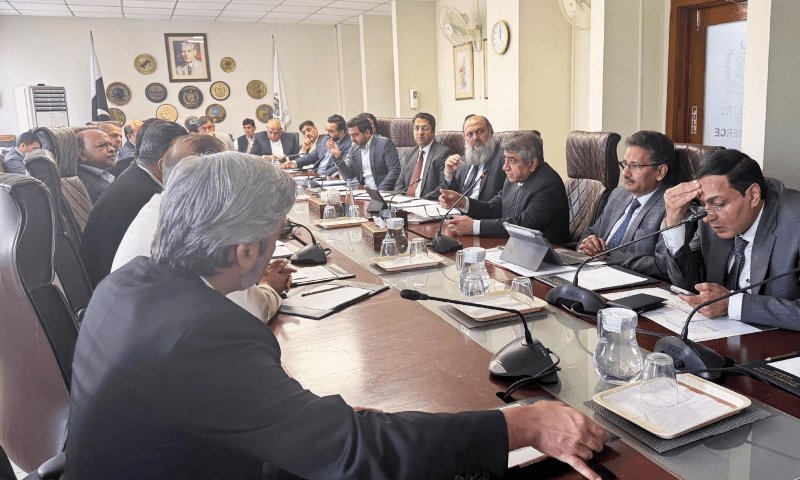
Commerce Minister Jam Kamal convened a meeting on Monday with textile exporters to deliberate on Pakistan’s strategic approach and response to US tariffs. “Our trade officers and ambassador in the US maintain ongoing communication with the relevant authorities to ensure that Pakistan’s concerns are conveyed,” the minister stated.
Exporters expressed their apprehensions regarding the ministry’s lack of readiness to address the post-US tariff situation. The ministry refrained from disclosing its strategy, and the meeting appears to be limited to superficial discussions, one of the participants told Dawn.
However, the ministry’s announcement termed the meeting a proactive measure.
Impact evaluation
Meanwhile, the Policy Research and Advisory Council (PRAC) of the Karachi Chamber of Commerce and Industries has conducted an in-depth examination of the US tariffs impacting Pakistan’s products, particularly in the textile sector and its competitors.
This report is the initial effort to underscore the real effects, as the commerce ministry has not yet released any analysis regarding Pakistani exports to the US.
PRAC Chairman Younus Dagha emphasised the urgency for Pakistan to finalise its response promptly. This is crucial for the country to extend reciprocal tariff reductions to the US on key strategic products such as soyabean, machinery, and cotton.
He stated that Pakistan must implement a zero duty on all products provided to China and Gulf Cooperation Council (GCC) countries as part of its preferential trade agreements.
He stated that this is the sole method to obtain some reprieve from the US regarding textile products.
He suggested engaging proactively with US trade officials to discuss potential tariff adjustments, which are critical in safeguarding Pakistan’s market share in the US.
Textiles account for 77pc of the total export volume to the US. The total value of textile and textile articles exported amounts to $4.18bn, making it by far the most significant category in terms of trade value.