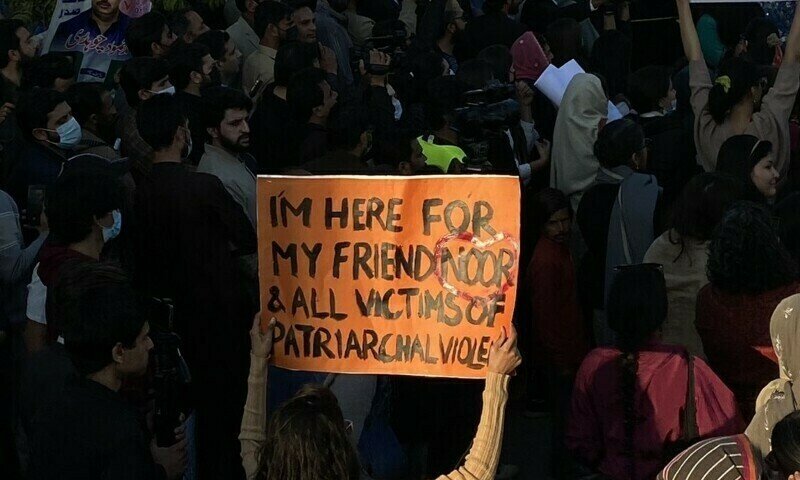
The organisers of Aurat March Karachi announced on Thursday the postponement of this year’s march, originally scheduled for May 11, Mother’s Day, citing the “war-like situation between India and Pakistan.”

On Wednesday night, India attacked several sites in Pakistan as part of its ‘Operation Sindoor’. Thirty-one Pakistani civilians have been killed and another 57 injured. In retaliation, Pakistan’s military downed five Indian jets, and destroyed an Indian brigade headquarters and check posts along the Line of Control. On Thursday, the DG ISPR said 25 Indian drones had been downed since last night. Amid the escalation, flight operations at the Karachi, Lahore and Sialkot airports have been temporarily suspended.
The Aurat March organisers highlighted the disproportionate impact such crises have on marginalised communities — particularly women, trans, and non-binary people from working-class backgrounds.
“This decision was not made easily or quickly,” read the statement issued via the Aurat March Karachi’s Instagram account. “Especially in light of how hard we voluntarily work all year round to bring people out on the streets.”
The current political climate, the organisers noted, poses serious logistical and safety challenges for the very people the march aims to empower. “In the current climate, we must consider the risks that disproportionately impact those same communities: the fear of movement, the possibility of violence, and the increased surveillance that always accompanies national security narratives.”
Importantly, the Aurat March Karachi is postponed, not cancelled. “Our fight continues,” the organisers stressed, reaffirming the urgency of their demands. “The demands we raised this year remain urgent: social security, access to reproductive healthcare, housing, labour protections, recognition of unpaid work, maternal care, and freedom from violence. These are not secondary to national concerns they are national concerns. And we will keep organising around them until we are back on the streets.”
The Aurat March also added a new demand: “that our state pursue a path of diplomatic resolution and peace.”
The statement went on to highlight how war diverts attention and resources away from fundamental social services.