A report on journalism in Balochistan has highlighted how pressure, intimidation and violence from multiple actors have caused the space for press freedom to shrink in the province.

The report, titled State of Media Freedoms, Access to Information and Safety of Journalists and Media Professionals in Balochistan – The Way Forward, was released by Freedom Network (FN) on Sunday and examines Balochistan’s overall media landscape, threat actors, service structures, gender dynamics, legal cases and challenges, including censorship, harassment, intimidation and dismissals from service.
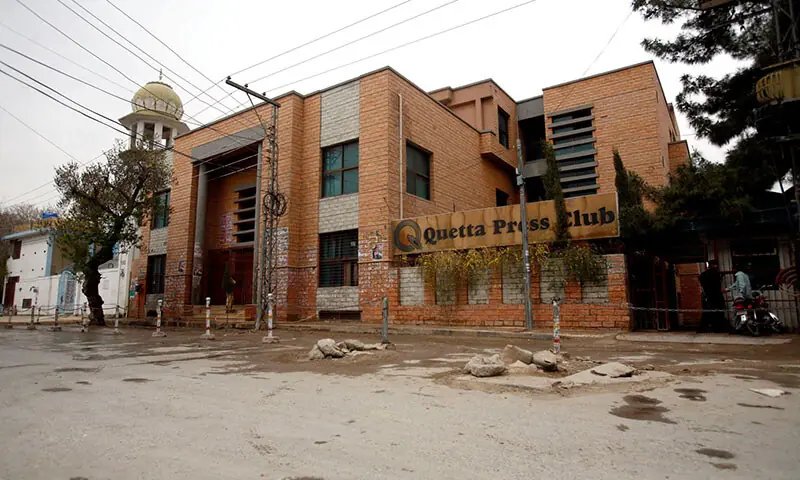
It notes that national television channels and newspapers have steadily reduced their bureau presence in Quetta, as digital distribution becomes the norm, leaving coverage outside the provincial capital sparse or non-existent.
“Drawing on desk research, focus group discussions and key informant interviews, it (the report) finds a chronically constrained information environment in which local media are financially brittle, structurally peripheral to ‘national mainstream’ agendas, digitally disadvantaged, and exposed to overlapping coercive pressures from state and non-state actors,” the report stated in its executive summary.
“The cumulative effect is systematic under-coverage of public-interest issues, heightened self-censorship, and a steady erosion of citizens’ right to know.”
The province still lacks a terrestrial current affairs television channel. State-run outlets such as PTV and Radio Pakistan operate mainly from urban centres, and their multilingual mandate complicates both content production and audience reach.
The report highlighted privately-owned TV channels based in Karachi, which have positioned themselves as 24/7 satellite channel for Balochistan audiences with national and diasporic reach.
Additionally, print media is largely concentrated in Quetta and struggles with high costs, long distances and low literacy rates in rural areas.
The report also traces how security conditions, governance failures, economic constraints and demographic realities have shaped the media ecosystem and journalists’ safety in Balochistan.