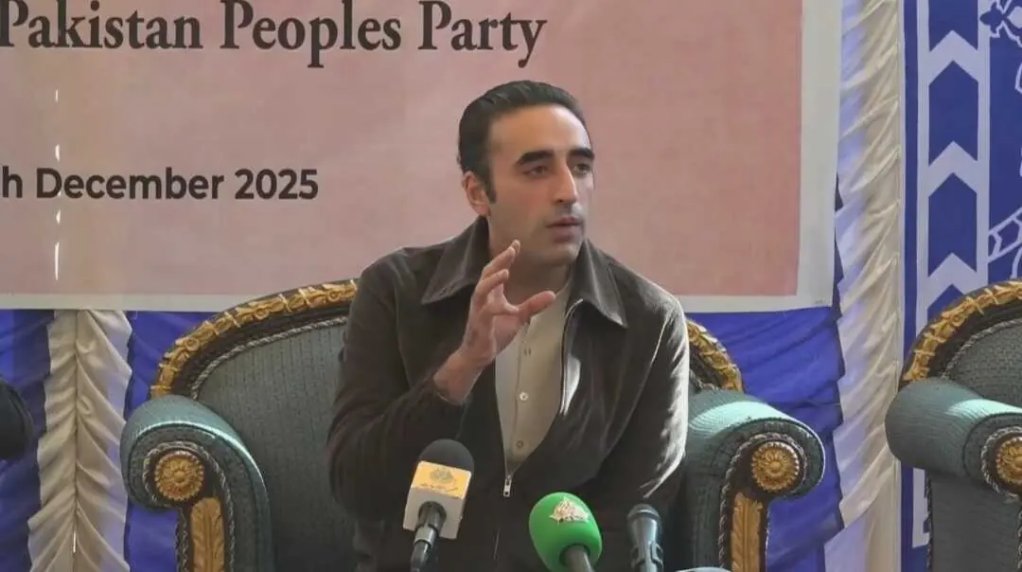
PPP Chairperson Bilawal Bhutto-Zardari highlighted on Sunday the significance of the politics of reconciliation, urging the opposition to play a “responsible” role and also called for the ruling party and its allies to take the necessary steps in this regard.

Bilawal expressed these views while speaking to the media at the inauguration ceremony of the Sindh Institute of Child Health and Neonatology in Larkana.
He recalled that former prime minister Benazir Bhutto had given the message of “truth and reconciliation” and “reconciliation in politics”.
Linking it with the country’s progress and economic prosperity, he said the ruling party and its allies would have to play their part for this while the opposition would also have to play a “responsible role”.
“If stringent [measures] are taken in response to the politics of extremism, then there should be no complaints,” he remarked, quoting the English idiom “if you can’t stand the heat, get out of the kitchen”.
He added, “If you (the PTI) attack a national institution just because of a small NAB (National Accountability Bureau) case against your leader and because of a small arrest, then don’t complain. Action will be taken against you in accordance with the law and Constitution.“
Bilawal maintained that if the PPP had been in PTI’s place, it would have faced more severe consequences.
He advised the PTI to let go of the “politics of extremism”, saying that it would not benefit the party itself and its workers, but it would also have a positive impact on the country’s politics.
The PPP chairperson then went on to say that while Benazir’s philosophy was that of the politics of reconciliation, President Asif Ali Zardari had played the “biggest role” in its implementation.
“From the first day after the election till yesterday in my speech, and even within the party, my stance has been that President Zardari will have to play his role.
“President Zardari not just has a [track record] but also the people’s confidence that he is capable of playing a role for reconciliation in politics,” Bilawal said.
However, he pointed out there was a “unique dynamic” that had to be considered in current circumstances.