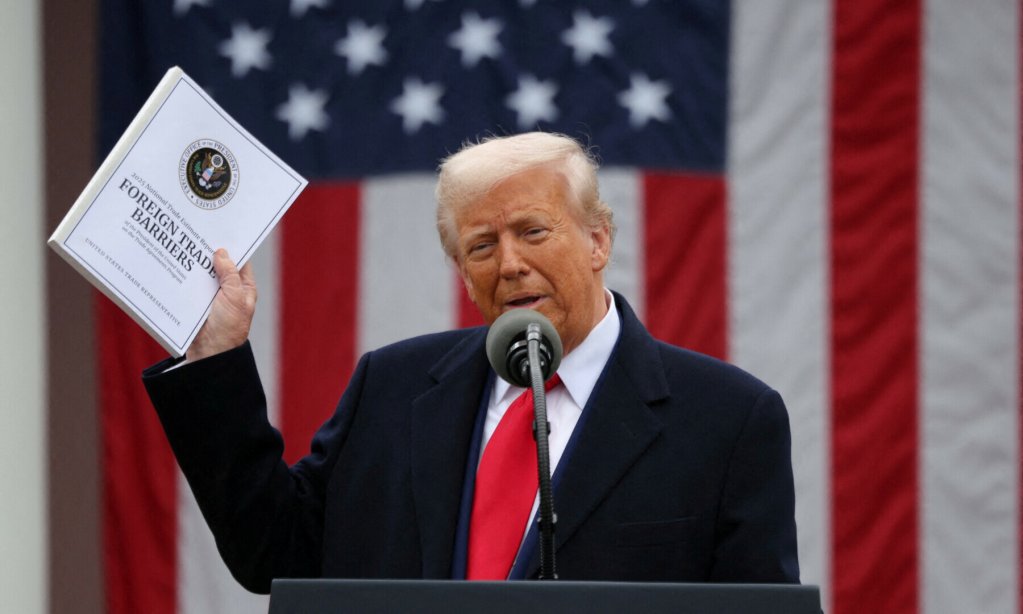
Analysts saw immediate hurdles and long-term opportunities for Pakistan after US President Donald Trump on Thursday imposed a 29 per cent tariff on goods the United States imports from Pakistan, along with duties on dozens of countries from rivals to allies, intensifying a global trade war.

The US imposed 29pc reciprocal tariffs on Pakistan, which charges the US 58pc, according to a board that Trump held during his announcement.
Ali Hasanain, associate professor of economics at LUMS, said that “America is one of Pakistan’s most important trade partners, and the one with which we run the largest trade surpluses”, adding that nearly a fifth of the country’s exports were destined for the US.
He highlighted that exports to the US were less than 1.5pc of Pakistan’s GDP.
“Even if these are entirely wiped out — which is highly unlikely — the impact will be smaller than multiple times we have shrunk our economy through our own mismanagement,” he said.
On whether this would impact US-Pakistan relations, he noted that relations with the US appeared to be stable but “in a low equilibrium at the moment”.
“The trade relationship is one component of our dealings with the US. Far more important in the short term is American support for Pakistan’s IMF programme,” he said. “And I — as a non-expert watcher of International Relations — expect the impact to be minimal.”
He highlighted that since the tariffs impacted the US trade relations with all countries, there would a major shift in global trade patterns as a result — where countries will seek new options.
“However, the US is by a significant margin our biggest market, and may not be fully replaceable for Pakistani businesses,” he said.
On Pakistan’s pivot to other countries, he highlighted that there will be some attempts to shift to other markets by Pakistan and other major textile exports such as Bangladesh.
“Pakistan should continue to seek more diverse markets for our products, while at the same time working with other countries to join multilateral efforts to dissuade the US from staying on this course, which will shrink global trade overall and dampen economic activity moving forward,” he said.
Immediate impact to be ‘negative’
Sajid Amin, economist and deputy executive director (res) at Sustainable Development Policy Institute (SDPI), speaking to Dawn.com, noted that immediate impact will be negative, considering the US is the country’s largest trading partner.
“To offset that, Pakistan might have to subsidise local production to become more competitive,” he said. “Somewhere, you would have to cut down on local production costs” of the major exports to the US.